


Author Interview with Lara Reed
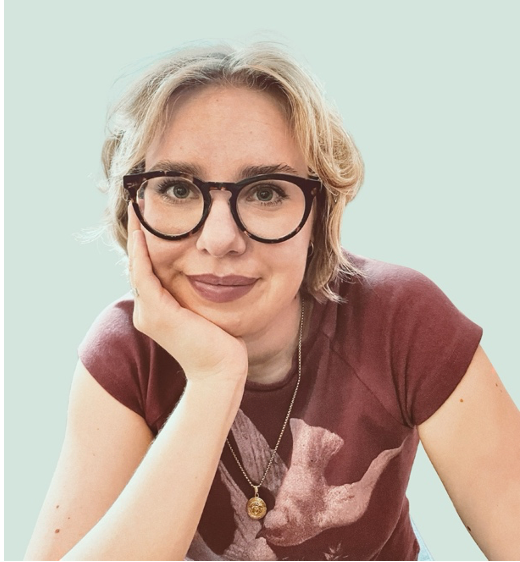
Lara Reed is a queer author with a background in feminist political theory. She writes historical fantasy featuring fiercely ambitious women and star-crossed lovers (dial up the yearning and drama), and self-published her debut, Crown of Serpents, in March 2025. When she is not tormenting fictional characters, she works as a consultant in the humanitarian sector and city-hops around Europe (currently based in Stockholm, Sweden).
a. How did you become a writer?
I’m not sure whether this was really the beginning of my dream, but I wrote my first book at 7 during German class. It was a picture book about a magical unicorn, and I used entirely too much glue to stick the pages together.
I think what really made me want to become a writer was the slow realisation that I can think and feel (!) much more clearly when there is a pen in my hand. Suddenly, the chaos in my head is structured and calm, and the world makes sense – or at least the world that lives within the confines of my page. This is what made me fall in love with writing. I didn’t always know whether I wanted to be an author (at one point I wanted to be a journalist and enjoyed writing speeches), but I always wanted to be a writer.
b. What inspires you to write?
My muse takes different forms depending on the book. For my current project, THE TENTH MUSE, a queer reimagining of the legendary Greek poet Sappho, my writing journey was a key part of my own coming-out. Sappho's poetry helped me come to terms with my sexuality, and I found it heartbreaking that her work (over 10,000 lines) survives only in fragments, and even less is known about her life. In my book, I wanted to celebrate the history and art of this queer icon, and it was precious and healing to write a sapphic love story inspired by her verses.
On a more personal note: Sappho’s love interest is named after my best friend, and I wrote this book for her, capturing the sweet agony of falling in love at the most inconvenient moment. So you could say that baby’s first sapphic heartbreak also inspired this book.
c. How do you develop your plot and characters?
Since my stories are grounded in myth and/or history, plotting for me always starts with research, research and more research. First, I try to learn everything there is to know about the historical figures, their relationships, and the wider socio-political context. Once I have this web of information, I organise it on my drawing board and start asking my favourite question: “What if …?”. The tweaks are usually at the heart of my plot, and once I have found the scenario that excites me most, I use the Save-The-Cat structure to create a story arc.
I study my loved ones and their emotional worlds very closely (they’re all bugs under my microscope). My family and friends appear in my novels in fragments. Sometimes it’s the (nick-)names I give my characters; sometimes it’s the beloved features or interests I emphasise. Usually, I interview them about specific experiences they have had (e.g., what does grief feel like for you) to make my characters’ emotional worlds more vivid.
d. Could you share some of your challenges as a writer?
This directly ties into my previous answer: I LOVE research. My stories are grounded in mythology, and sprinkling in nods to the poets and artists who came before me makes me positively giddy. Unfortunately, that means I sometimes get lost in the nitty-gritty details when I write a scene. For instance, if I draft a dinner scene in the throne room, I might end up spending hours researching what menu would have been served in Archaic Lesbos (or what the tapestry would have looked like) before getting a single word about the marriage negotiations (the actual plot) on the page.
That’s why I have stopped researching while drafting. I do my essential background reading before starting the first draft, then I write and leave placeholders for the details I still need to look up. During the months it takes me to complete the first draft, I compile an extensive reading list of additional texts I want to read. Then, before starting revisions and the second draft, I take a break to research what I have been missing.
e. Tell me about your protagonist. What's your favourite trait and/or weakness?
Sappho was the legendary poet whose name later inspired the term “sapphic”. My favourite trait to write is also one of her more problematic ones: her fierce ambition to become the greatest writer of her age. This deep-rooted need to prove herself propels her to new creative heights, but on the flip side, her ambition drives her to bend the rules here and there, and, when she fails, it takes an even darker turn, becoming crippling self-doubt. What was even more fun to unravel was the reason she chases fame and glory in the first place, but I won’t spoil the book any more than I already have (hint: it’s a coping mechanism for what she really craves).
In conclusion, I adore writing complex characters that you sometimes want to shake by the shoulders (and sometimes you just want to give them a big ol’ hug).
f. How does your antagonist create conflict?
I don’t just have one antagonist, but a group of rich, old men who are stirring the pot. Sappho’s world is inspired by archaic Lesbos, a period famous for the constant war between rival aristocratic factions.
As a noble daughter herself, Sappho spent her life as her father’s political instrument. That is, until his coup collapses because his ally double-crosses him to seize the throne, exposing her family and forcing her into an arranged marriage to salvage their standing. Sappho's only escape is to flee to the temple of Erato, Muse of love poetry. Her plan: become a renowned poet to gain the protection of her fellow priestesses and patrons, so her father can never use her again.
While Sappho wants to focus on her art and poetry, she is eventually drawn back into the conflict she sought to escape (because art is always political) – especially when she discovers that the woman who inspires all her poetry is now married to the very tyrant who betrayed her family. Without giving too many spoilers, both aristocratic factions attempt to weaponise Sappho’s voice, and the star-crossed lovers end up in a Romeo-and-Juliet-esque bind.
The main antagonist in Sappho’s emotional journey, however, is her narcissistic father. He taught her that love is earned by performing “usefulness” (e.g., by becoming the dutiful wife of a close ally or the island’s most renowned poet supporting his cause), and is not above resorting to threats or blackmail if his daughter refuses to fall in line. This pattern is what Sappho needs to unlearn throughout the book if she wants to stand a chance of a Happily Ever After.
g. What are your future projects?
I have so many ideas in my pipeline, but generally I’d love to explore different time periods within historical fantasy (e.g., the Enlightenment and the birth of capitalism, and 17th-century witch hunts, as well as Bourbon Versailles and the culmination in the French and Haitian revolutions).
One project I’m especially excited about is a dynastic fantasy duology set in a kingdom of obscene grandeur, where the nobility uses life-magic to maintain "growth zones," edens where nothing is permitted to die or decay. But death cannot be suppressed. Instead, it is funnelled to the kingdom's fringes, where it curdles into rot-storms, mutated beasts, and devouring overgrowth. At the heart of the story are two princess sisters with opposing magic—one healing, the other decaying—pitted against each other in a deadly trial for the throne, only to discover the paradise they're fighting to rule is a lie that will rot out from under them unless they unmake it together. Think the tragic sibling rivalry of Zuko x Azula meets the eerily cursed kingdom of A Treachery of Swans.
I'd also love to branch out into queer contemporary romance. For instance, I’m currently working on a sapphic rivals-to-lovers romance set in the cutthroat world of fashion magazine publishing, in which two women compete for the same editor's chair.
h. Do you have a routine you follow when writing?
Yes, I’m an early bird and am at my sharpest between 6 and 8 am (before anyone disturbs me or work drains me). That’s my dedicated writing time, and when I draft, I aim to get 1,000 words on the page each day. For those wondering: Yes, I drink a lot of matcha (always with oat milk).
i. If you could go back in time and give yourself advice, what would it be?
When writing the first draft, there will ALWAYS come a point when you start doubting the entire story and want to throw it in the bin (usually around the 60% mark). It might be because you have just had an idea for a new (and therefore more exciting) project, or because you have completed the fun-and-games section and the plot is now getting serious.
I have had this with every book I have written, but once I pushed through the slump and reached the climax, every doubt was forgotten and I loved the story more than ever. So, finish that first draft – especially when you have got far enough that it stops being new and exciting. You will cackle like a maniac once you write the final battle, and you can still edit the cursed 60-80% if they drag.
j. Do you have any advice for aspiring writers?
Seek out help where you can, ESPECIALLY if you don’t have a team yet. You might feel anxious to share early drafts of your work with beta readers, critique partners, or even your friends, but doing so will make your story 10 times better. They will be able to see plot holes or inconsistencies in character motivations that you might be blinded to because they make sense in your head.
The same goes for other aspects of the author journey. I self-published my debut, Crown of Serpents, and designed my own cover, taught myself how to draw character art, and formatted the book myself. While I love that the final product is now 100% my work, this decision did cost me countless sleepless nights that I could have spent marketing my book (do not underestimate this!) or working on the sequel. Your time as an author is sparse, so use it for what you are best at (writing), and get support from the wonderful professionals, artists, or your friends in the bookish community for the rest.
j. What is your preferred method for readers to get in touch with you?
Instagram: @larita.reads
TikTok: @laritareads
E-mail: contact@larareed.com
Website: https://www.larareed.com


Comments